Technology

Microvolts, honestly handled.

Brain activity at the scalp is measured in millionths of a volt. Almost everything else — a blink, a clenched jaw, a cable moving — is bigger. Most of the engineering in this product is about telling those apart.

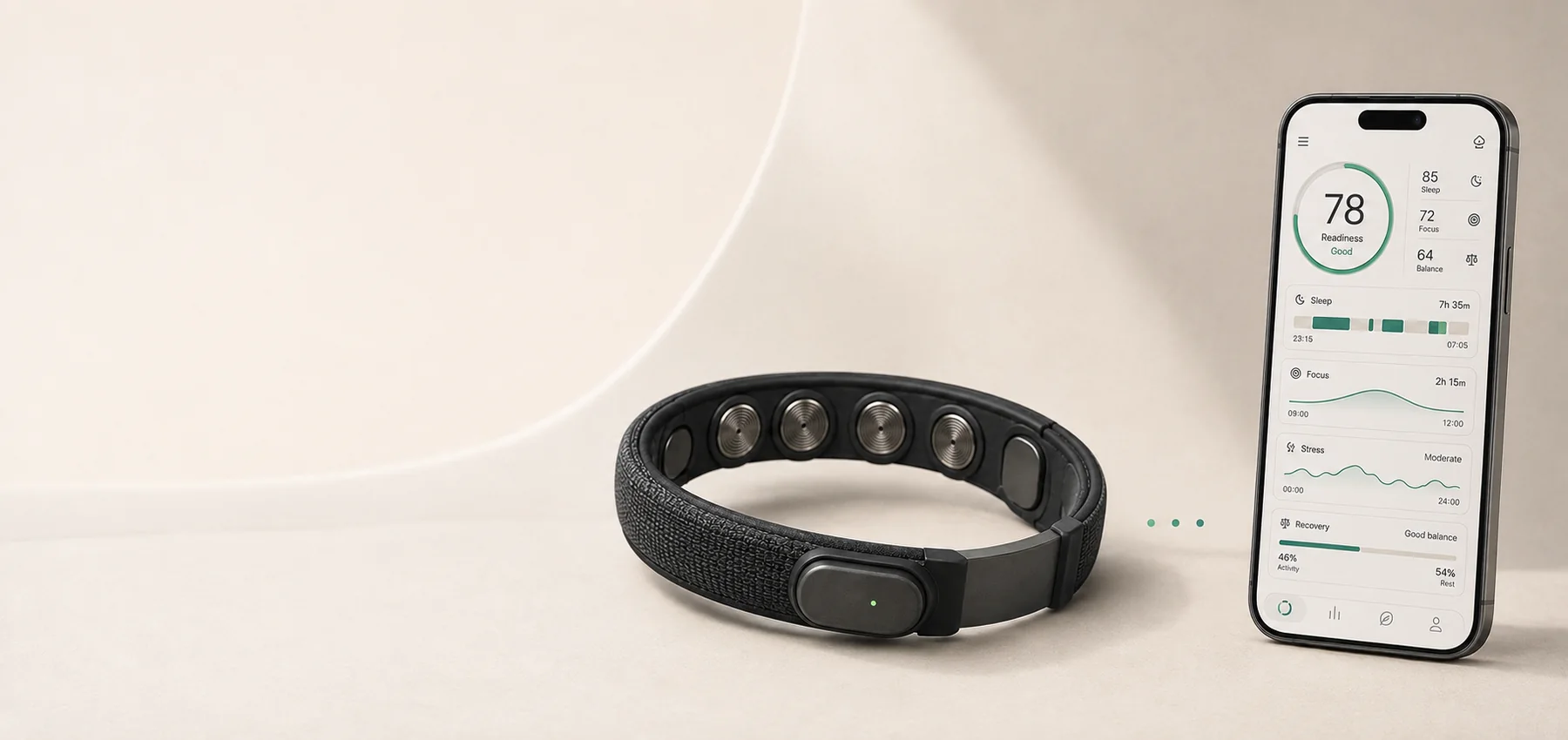
The Ninug band beside a phone showing readiness, sleep, focus and recovery

How it works

Three steps, and the second one is the hard one.

01 · SENSE

The band reads you

Dry contacts against the forehead and behind the ear pick up brain activity, pulse, blood oxygen, temperature, skin conductance and movement. A separate sensor reads the room. Nothing is asked of you but to wear it.

02 · SEPARATE

The signal is pulled out of the noise

Brain activity at the scalp is millionths of a volt. A blink, a clenched jaw, a shifting cable and the mains supply are all larger. Contact quality is monitored continuously, artefacts are removed, and sleep is staged epoch by epoch — on the band and on your phone.

03 · SAY SOMETHING USEFUL

You get four seconds of reading

Everything is scored against fourteen days of your own baseline, never a population average. If contact was poor, you get a wider range or no score at all — withholding a number builds more trust than inventing one.

What gets measured

Eight signals, and why each one is there.

None of these is sufficient alone. Sleep staging, for instance, is unreliable from any single stream — it's the combination that makes it work.

SignalWhat it tells us
Brain activity
EEG
The electrical field at the skin produced by the synaptic activity of large populations of neurons. Delta is deep sleep, theta drowsiness and drifting, alpha calm alertness, beta active engagement. The band's frontal placement also picks up eye movement and jaw muscle activity — which sounds like a problem and is in fact how we detect REM, blinks, long eye closures and clenching.
Heart rate & HRV
PPG
Light is shone into the skin; blood absorbs it, and the amount reflected back rises and falls with each heartbeat. Beat-to-beat variability tracks the balance between the sympathetic and parasympathetic nervous system — the closest thing to a direct stress readout.
Blood oxygen
SpO₂
From the same optical sensor at two wavelengths. Overnight desaturation patterns are the reason we can raise a "worth discussing with a doctor" flag about breathing during sleep.
Breathing rate Derived from the shape of the pulse waveform rather than a separate sensor — breathing modulates both the amplitude and the timing of each beat.
Skin conductance
EDA / GSR
Sweat gland activity changes how well skin conducts a very small applied voltage. It responds to emotional arousal within seconds, and it responds whether or not the person notices.
Skin temperature Slow, and genuinely informative: the drop in distal skin temperature at sleep onset, and the timing of the nightly minimum, are two of the better markers of body-clock phase.
Movement & posture
IMU
Accelerometer and gyroscope. Head position, sleep position, nodding, stillness, and — for animals — whether they lay down at all.
Environment
separate room unit
CO₂, noise, light level and colour, temperature, humidity. The context every other wearable throws away.

The hard parts

Where consumer EEG usually fails.

Dry contact

Gel electrodes are the clinical standard and nobody will use them at home nightly. Dry contact means much higher and less stable impedance, which the amplifier has to be designed around from the start rather than patched later. We're evaluating conductive silicone, gold-plated through-hair pins, and slow-release saline "semi-dry" contacts — across hair types, not just on whoever is in the office.

Knowing when to shut up

Contact quality is monitored continuously. If it was poor for three hours, the honest answer is a lower-confidence score or none at all. Withholding a number builds far more trust than inventing one, and it's the difference between an instrument and a toy.

Your baseline, not a population's

Absolute signal amplitude varies enormously between people — skull thickness, hair, exact electrode position. Comparing you to an average is close to meaningless. Every score is computed against your own recent history, which is why the first two weeks are a calibration period.

On-device processing

Staging and feature extraction run on the band and on your phone. That's a privacy decision first, but it's also why the product works with no signal, on a plane, and on a night when our servers are down.

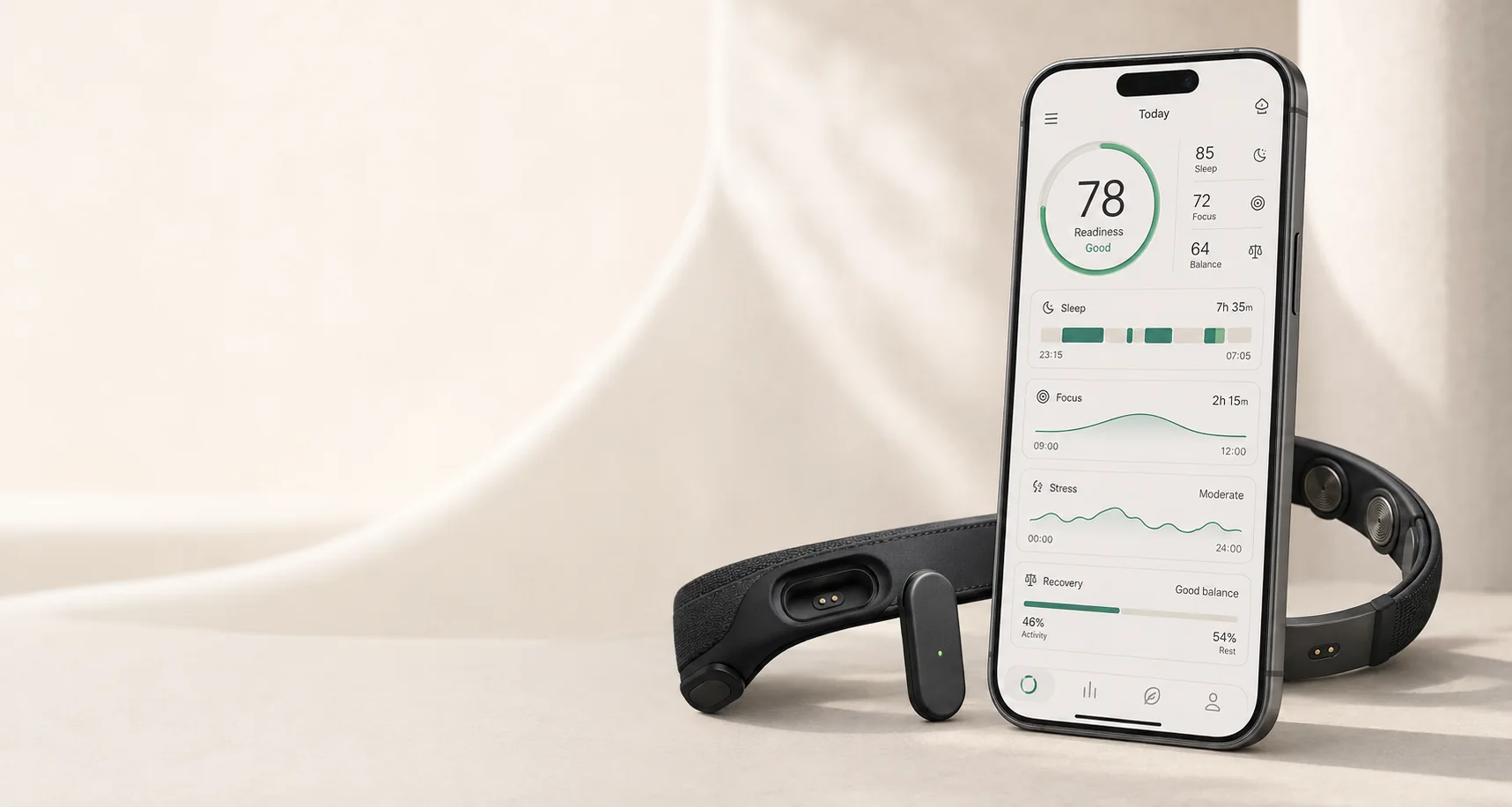
The Ninug app beside the band, showing readiness, sleep stages, focus and recovery

From signal to number

Microvolts in. Four seconds of reading out.

Between those two things sit artefact rejection, impedance monitoring, stage classification and fourteen days of your own baseline. None of that is interesting to look at, which is the point.

All of it runs on the band and on your phone. The app is not a viewer for something computed on our servers — there is nothing on our servers to view.

WHAT WE DON'T DO

No current through your head

Some devices apply electrical stimulation to the scalp. We don't, and don't plan to in a consumer product. The evidence is contested, the safety burden for unsupervised overnight use at scale is serious, and stimulation artefacts would swamp the microvolt-scale recording that is the entire point of the device.

You also can't "filter out" a brain wave. Nothing external removes a rhythm from a brain. Anyone claiming that is describing something that doesn't exist.

Closed loop

Listening, then a gentle push.

During deep sleep the brain produces large, slow oscillations. Quiet bursts of sound, timed precisely to the rising phase of those waves, have been shown in published research to increase slow-wave activity.

It only works if the measurement works — the timing has to be derived from your own brain, in real time, wave by wave. That's the feature no wrist device can copy at any price.

Reported effects are modest and vary between people, so we'd rather show you your own stimulated and un-stimulated nights than quote someone else's average at you.

Materials & engineering

Worn against skin, every night, for years.

Which rules out a surprising amount. Everything in the contact path has to survive sweat, washing and skin chemistry without changing its electrical behaviour — because when an electrode drifts, the measurement drifts with it.

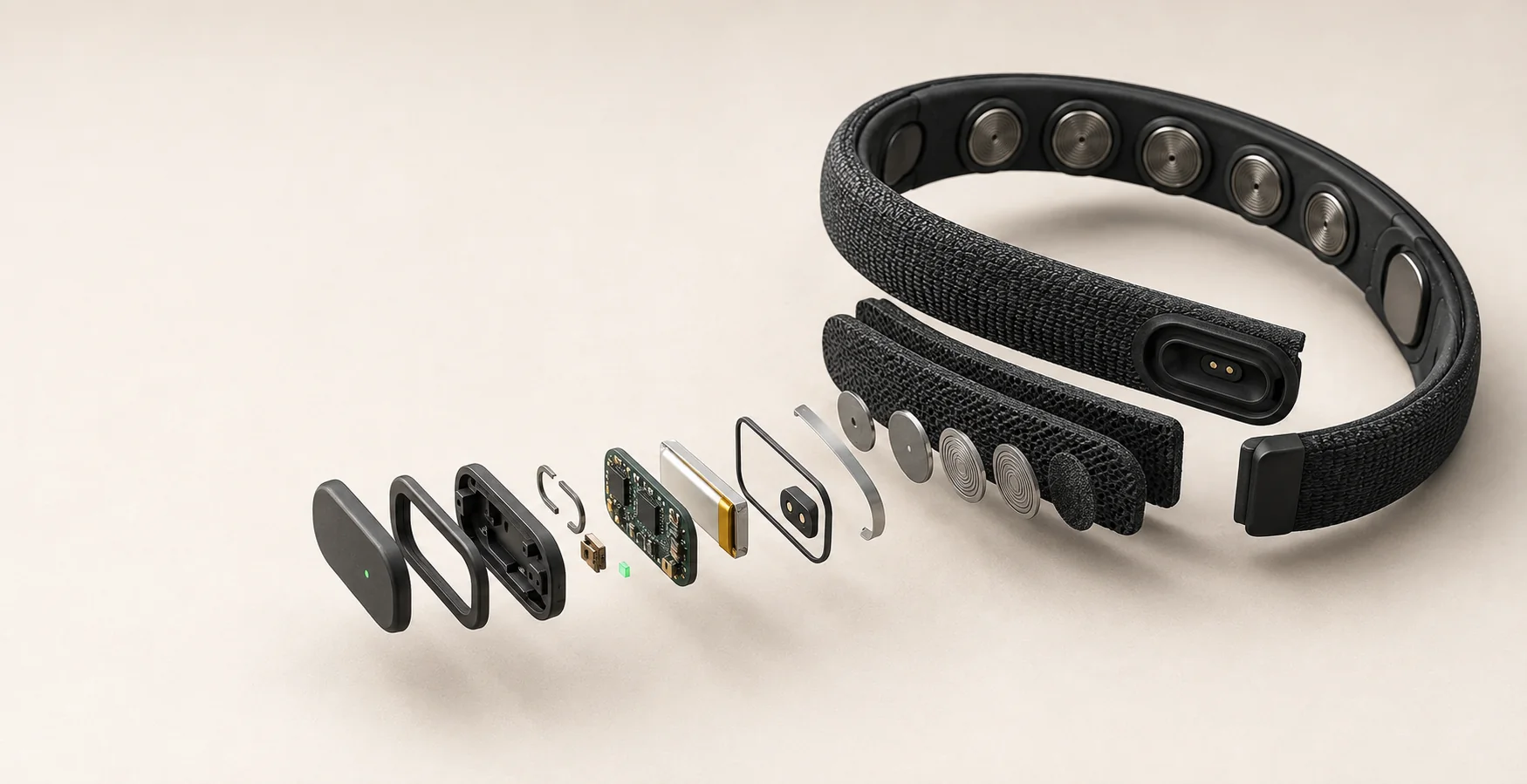
Exploded view of the Ninug pod: housing, seal, circuit board, battery, charging contacts and dry electrodes, beside the knit band
The pod, opened up: housing, gasket, board, cell, charging contacts and the dry electrodes that sit against the skin.
  • Dry electrodes, not gelConductive silicone on the forehead; gold-plated spring pins where hair has to be parted. Gel is the clinical standard and nobody will use it nightly at home
  • Nothing that commonly irritatesNo nickel, no latex anywhere near skin. Every contact material goes through biocompatibility testing before launch, not after
  • Recycled knit, silicone grippers insideSlip is one of the biggest causes of a ruined night’s data, so the band is designed to stay where you put it
  • Sealed against sweatThe pod is a sealed unit with recessed charging contacts that only mate inside the case, where they stay dry
  • The band is the consumableFabric against skin changes over months and takes your signal quality with it. Replace the band, keep the electronics
  • Findable in the darkAsymmetric by touch so it cannot go on backwards, and one-handed to fasten with your eyes shut

One thing we are testing openly: pin geometry that reaches the scalp through fine straight hair may not reach it through dense coily hair. Dry EEG has a poor record here, and we would rather solve it before the industrial design is frozen than ship a device that works better on some people than others.

Hardware

Two bands, because one device can't be both.

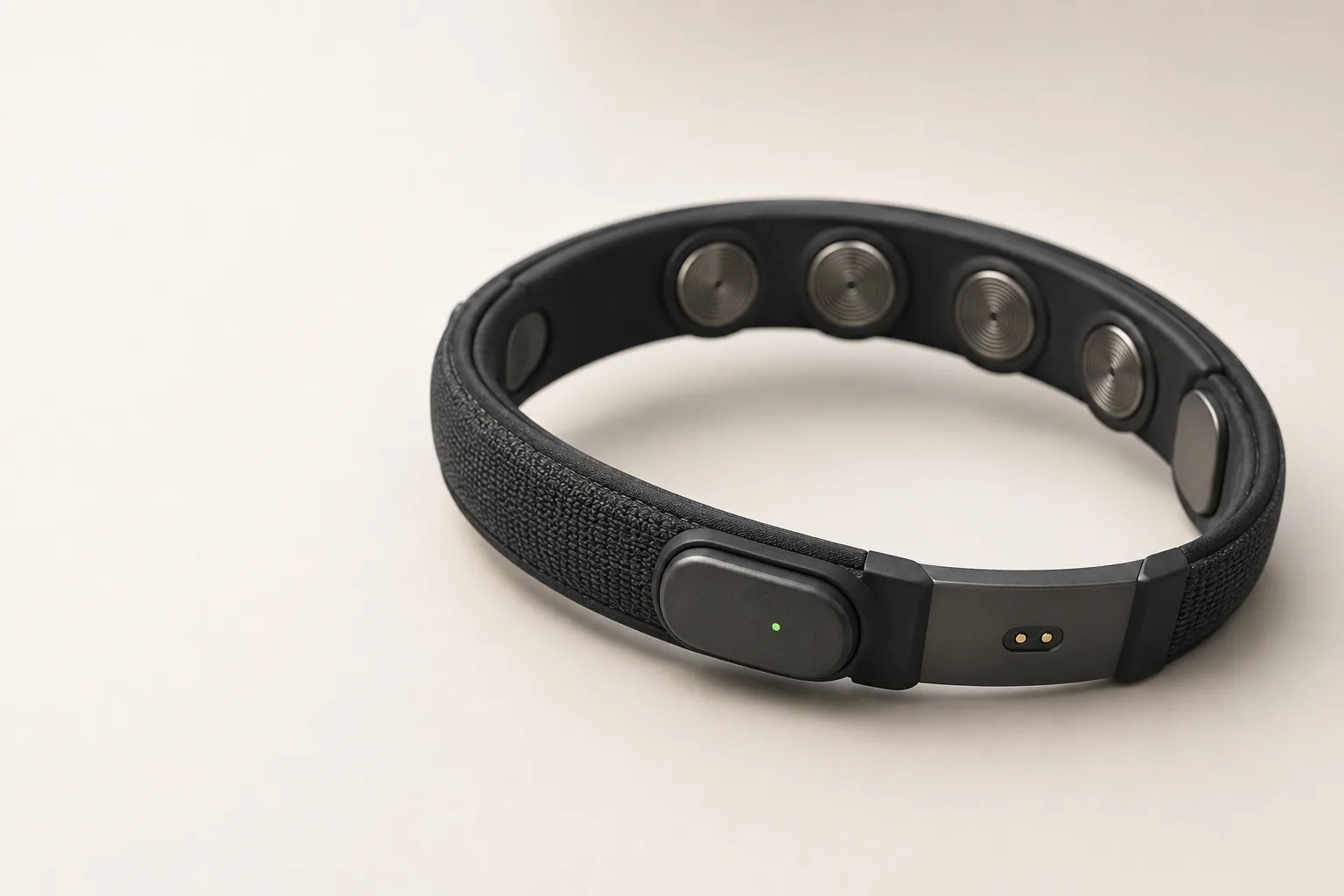
The Ninug Band, a soft knit band with a detachable pod

Ninug Band

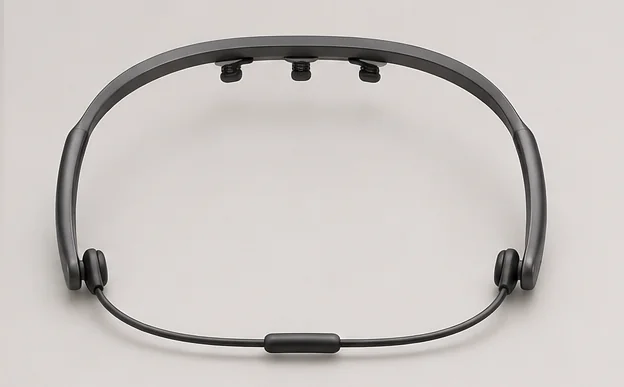
Soft knit, dry forehead contacts, one detachable pod, a reference behind the ear. Low enough profile to sleep on, washable, and designed to be put on one-handed in the dark. The band is a consumable; the electronics are not.

SleepStudy sessionsEveryday
The Ninug Pro band with spring-loaded through-hair comb electrodes

Ninug Pro

Individually sprung gold-plated pins that part the hair to reach the scalp, giving access to recording sites a forehead band can't reach. More channels, better coverage, and completely unsuitable for sleeping in — which is exactly why it's a separate product.

ResearchClinicsFatigue management

Where we are

Prototype, not product.

The current build is a development platform: a microcontroller with Bluetooth, a multi-channel biopotential converter for the EEG front end, optical pulse sensing, motion, temperature and an environmental module — streaming to a phone app.

That's enough to prove the data path and to run the studies that come next. It is not yet a device you'd want to sleep in, and we're not going to photograph it and call it one. The renders on this site are industrial design intent.

The number that will decide whether this works isn't a spec. It's how closely our sleep staging agrees with expert-scored laboratory recordings, measured independently and published. Everything else follows from that.