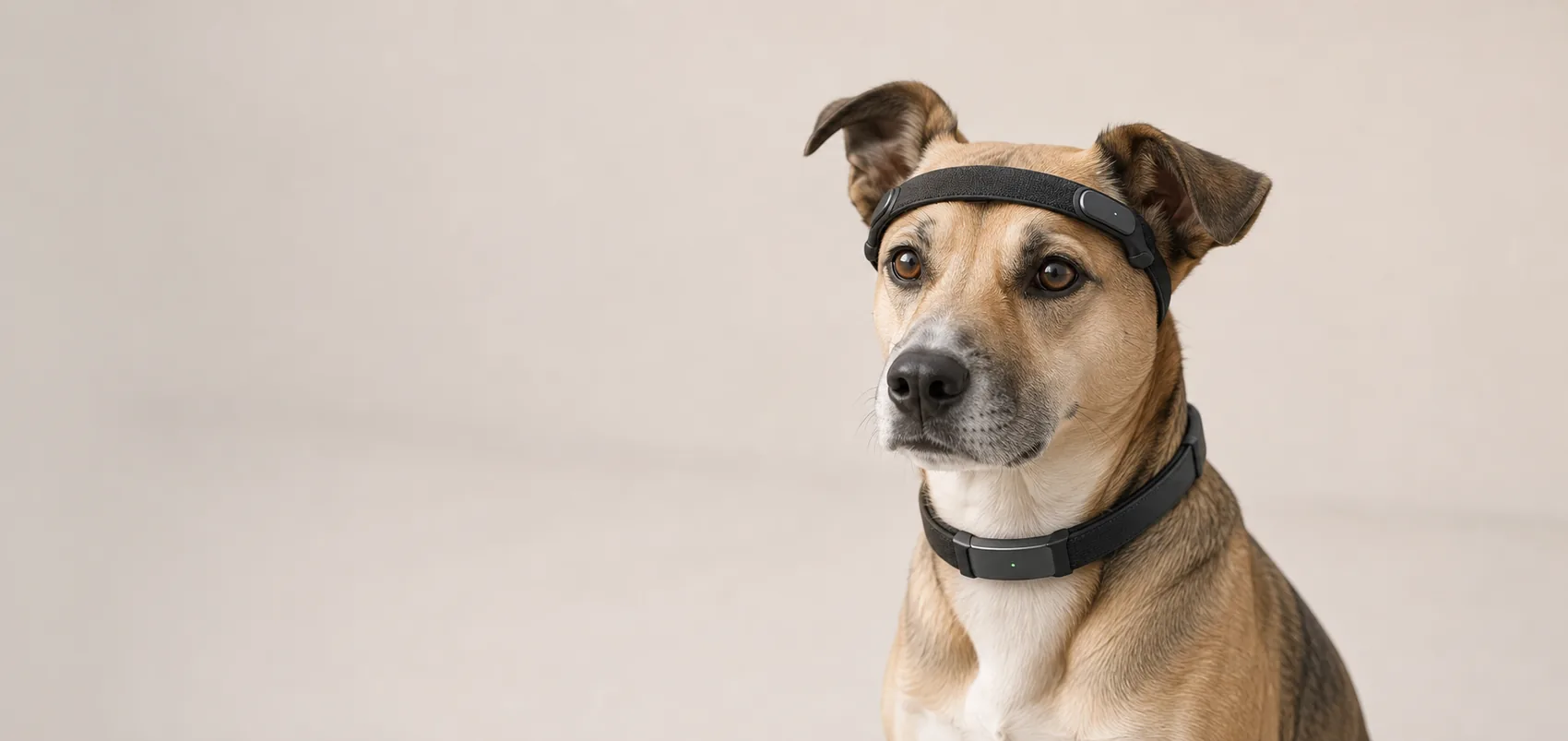
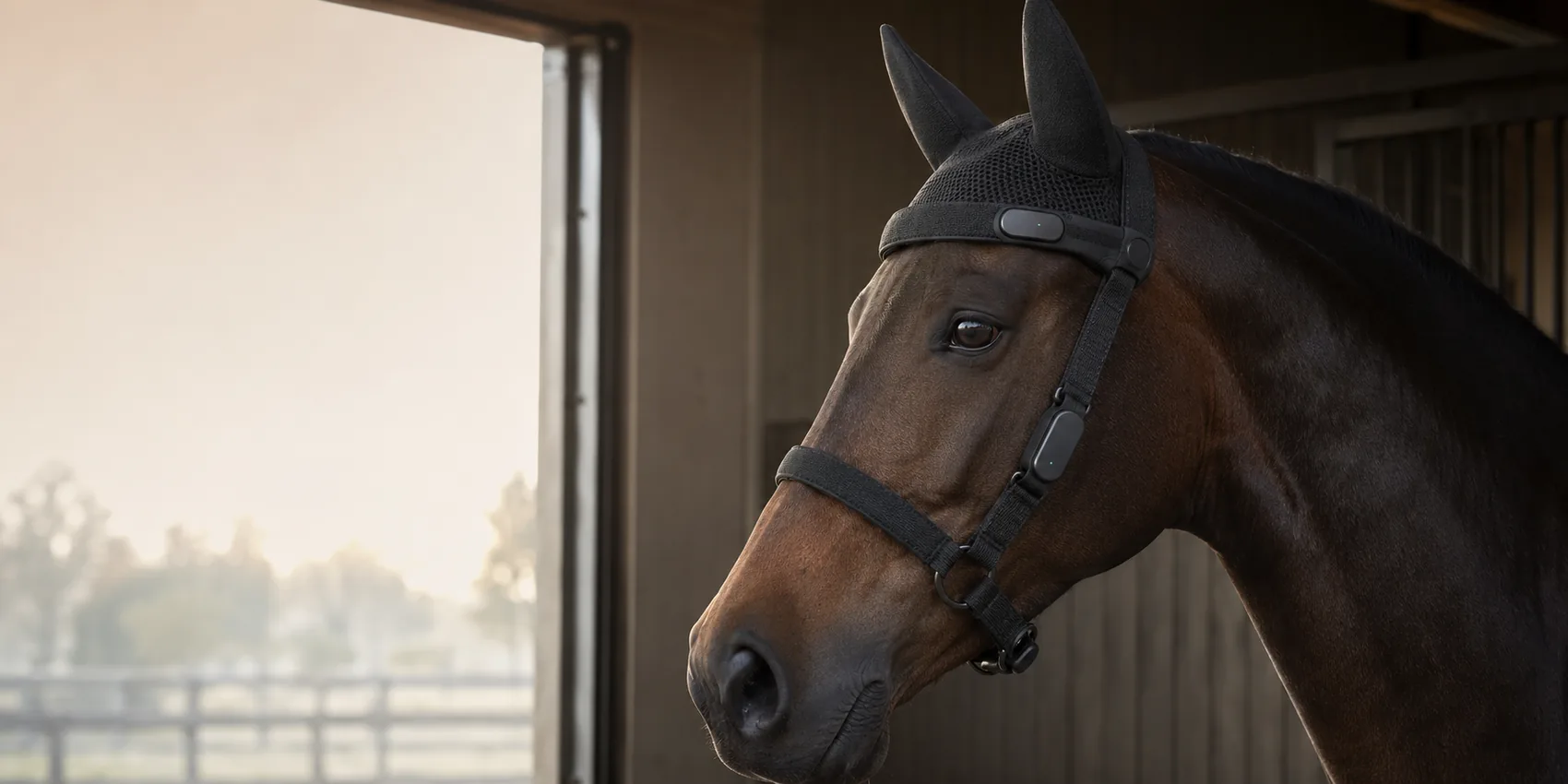
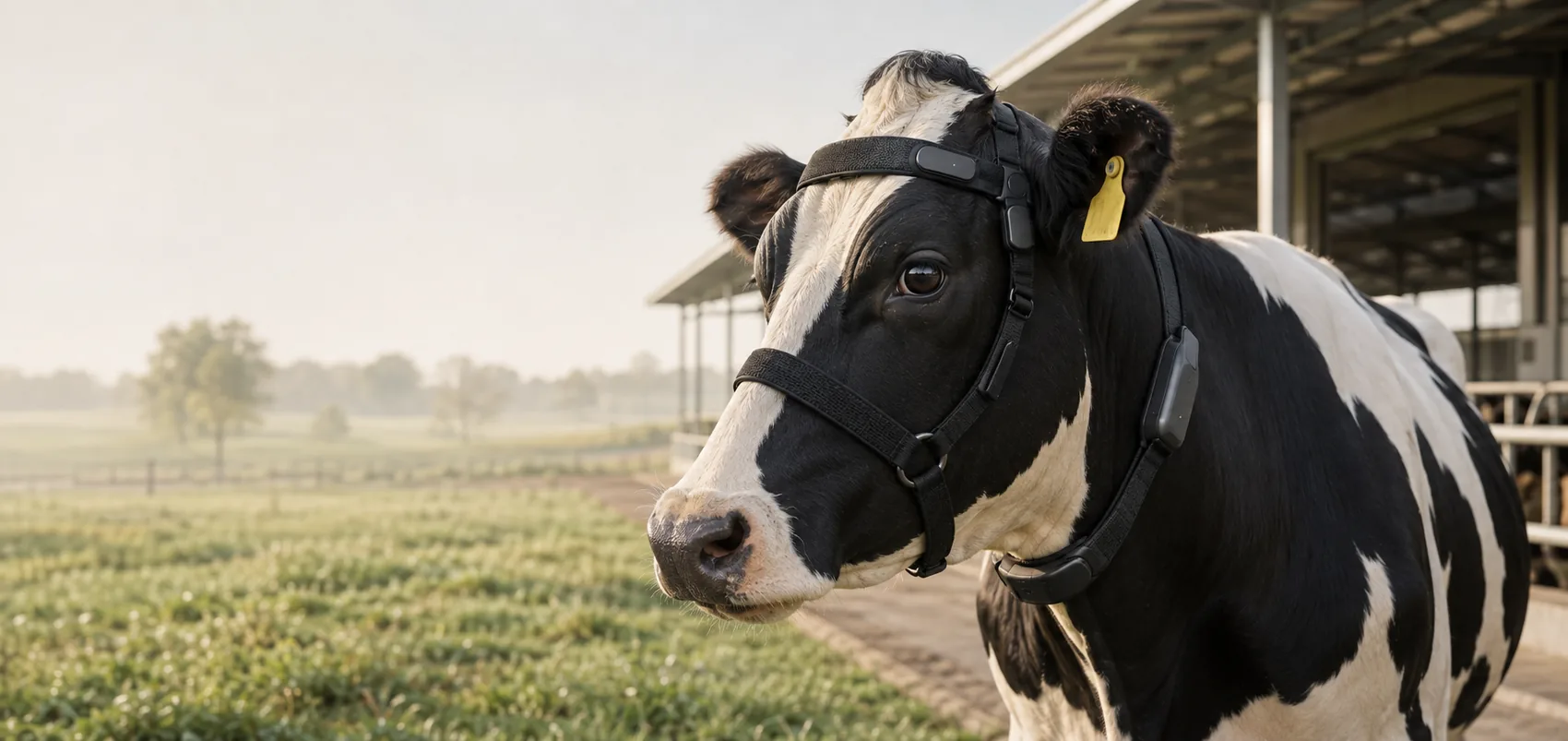
Ninug for animals
They can’t tell you. So measure.
Every wellness wearable for people competes with the person simply knowing how they feel. For animals, that competitor doesn’t exist — everything the device says is information nobody had.

Ninug for animals
Every wellness wearable for people competes with the person simply knowing how they feel. For animals, that competitor doesn’t exist — everything the device says is information nobody had.
Three programmes
A dog owner, a competition yard and a dairy farm are not one market. The sensing overlaps; almost nothing else does.
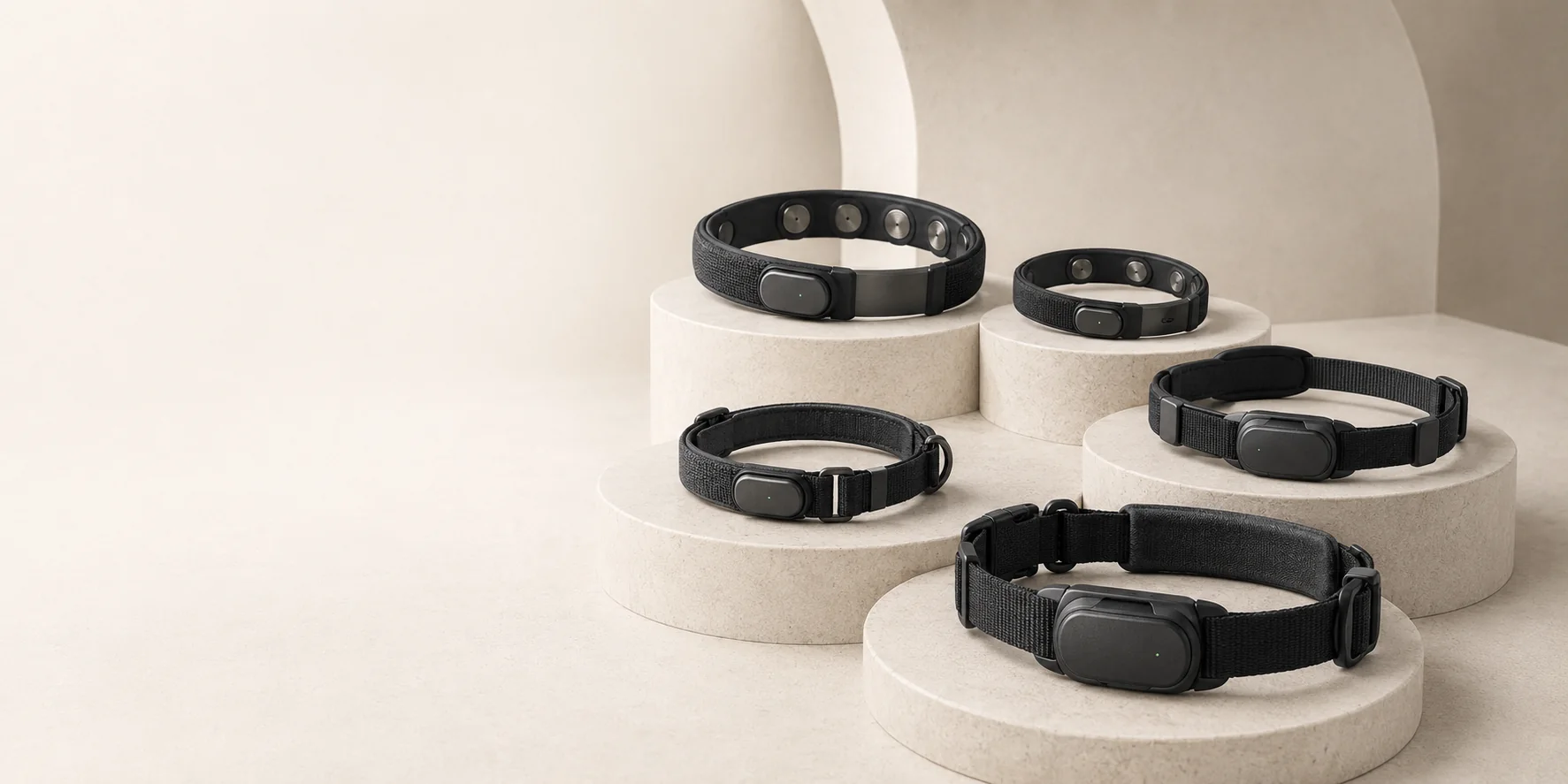
The hardware
The same sensing pod, in a collar, a halter strap or a bonnet insert — sized from a cat to a cow, and fastening the way that species’ equipment already fastens.
Why this works
Being straight about it
Reading EEG through fur is substantially harder than through human skin. Coat gets in the way of contact, the large jaw muscles that cover much of an animal’s skull produce electrical activity far bigger than anything from the brain underneath, and animals move unpredictably. Veterinary clinics often use needle electrodes under the skin for exactly these reasons.
So we’re sequencing it honestly. The first animal products use motion, heart rate, temperature and sound — which already answer the highest-value questions in every species we work with. Brain sensing arrives as an upgrade, when it’s genuinely ready, not as a launch promise.
If a company tells you it has solved non-invasive EEG for animals, ask to see the raw traces.
Veterinary practices, equine facilities and livestock operations who want to test early and shape what gets built.