Dogs & cats
Your vet makes decisions from what you can report. You are asleep for a third of your animal’s life and out of the house for another third — and the events that matter most have a habit of happening then.
Where it matters most
Epilepsy medication is titrated against seizure frequency, and the input to that decision is an owner’s diary — which necessarily misses everything that happens overnight or during a work day. An objective, timestamped event log is a direct improvement to veterinary care, not a gadget. This is the clearest unmet need in the whole companion-animal line.
Disrupted sleep–wake cycles and night-time restlessness are among the earliest recognised signs of cognitive decline in senior dogs and cats — and they are exactly what continuous sleep monitoring is good at. Earlier awareness means earlier management.
Owners and trainers argue about this constantly and nobody has evidence. Data ends the argument, and shows within days whether a training plan or a change of routine did anything at all.
Cats in particular are extraordinary at hiding discomfort, and owners consistently under-report it. Changes in rest, posture and night-time activity against an animal’s own baseline are often the first visible sign.
Working animals
Detection dogs lose scent-work accuracy as they tire, and handlers currently judge that by eye.
Fatigue and readiness scoring for search-and-rescue, customs, security and assistance animals is a small market with very high value per animal and an institutional buyer — and it is the one place in the companion line where a genuine performance claim is on the table.
How it’s worn
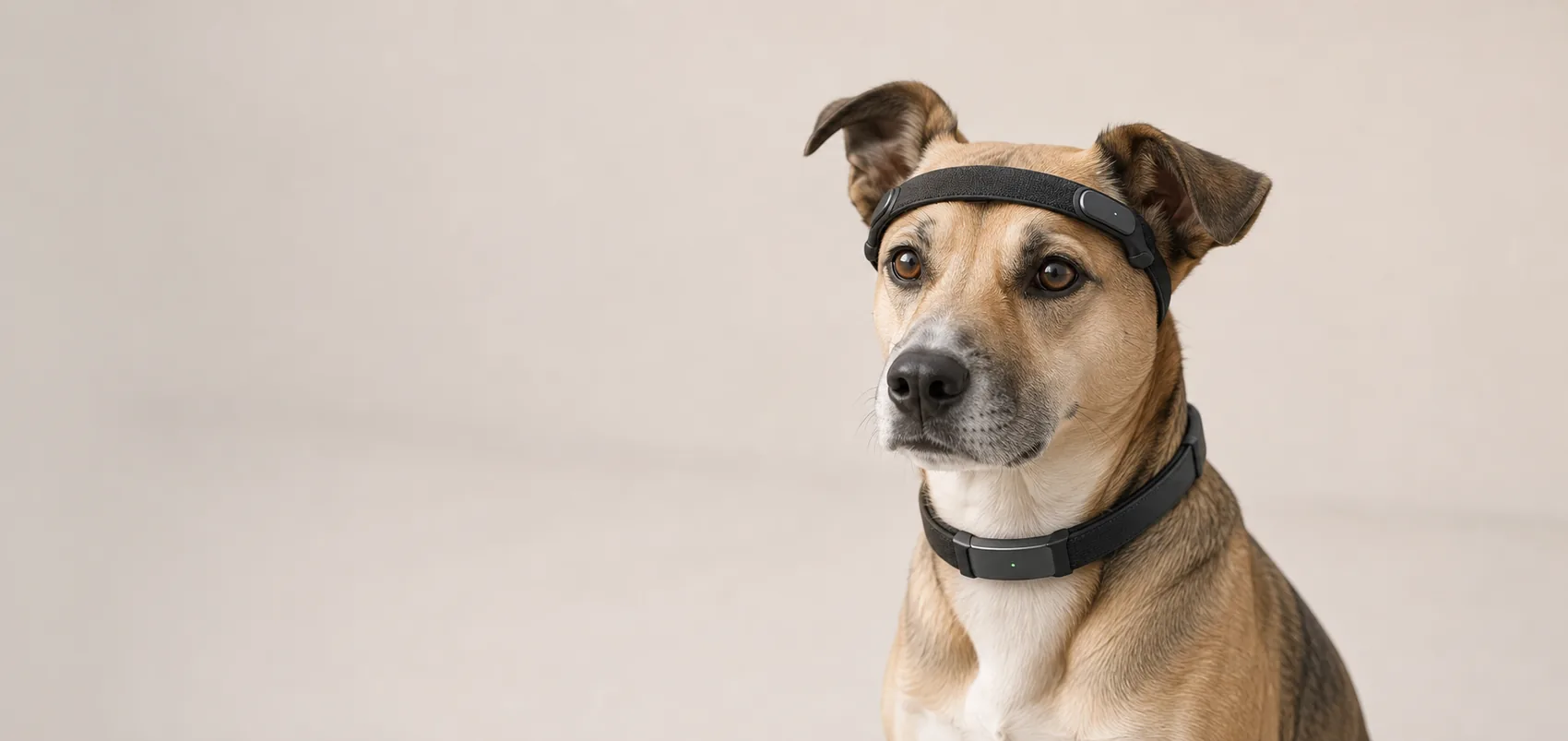
Animals already wear collars and owners already accept them. Motion, posture, rest, heart rate and temperature all come from there, continuously, with nothing new to get used to.
Worn for defined periods rather than permanently — a clinic visit, an overnight assessment, a monitored week. That’s an honest reflection of what animal EEG can currently deliver.
Being straight about it
Reading EEG through fur is substantially harder than through human skin. Coat gets in the way of contact, the large jaw muscles that cover much of an animal’s skull produce electrical activity far bigger than anything from the brain underneath, and animals move unpredictably. Veterinary clinics often use needle electrodes under the skin for exactly these reasons.
So we’re sequencing it honestly. The first animal products use motion, heart rate, temperature and sound — which already answer the highest-value questions in every species we work with. Brain sensing arrives as an upgrade, when it’s genuinely ready, not as a launch promise.
If a company tells you it has solved non-invasive EEG for animals, ask to see the raw traces.
Especially neurology and behaviour referral clinics, and anyone managing a caseload of epileptic or senior patients.