Driving & safety-critical work
The dangerous thing about falling asleep at the wheel is that the warning signs are visible in the signal minutes before they are visible to you. Drowsiness is the clearest, fastest state we can read — and the one where reading it early is worth the most.
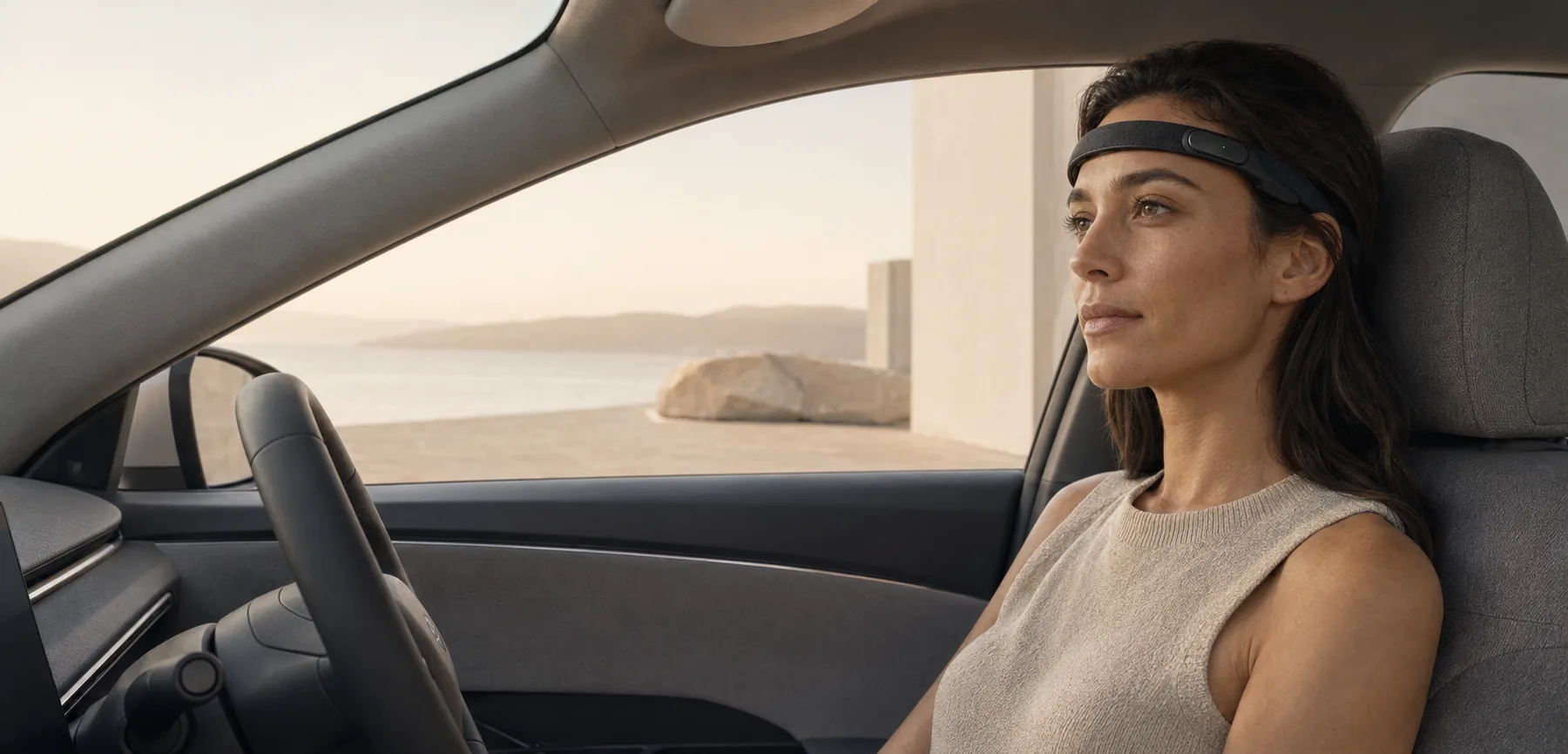
What it watches
The output is not a score. It is a short-horizon warning: elevated risk, stop within the next twenty minutes.
Who it’s for
Private drivers on the roads where fatigue crashes actually happen — motorways, straight roads, the small hours, the last hour of a long journey.
Freight, coach, rail, mining and haulage operations that already run fatigue risk management programmes and currently manage them with rosters and paperwork.
The people making consequential decisions at 4am, in a profession where admitting tiredness is culturally difficult and the consequences are borne by someone else.
If your employer buys it
Fatigue monitoring at work is a genuine safety need. It is also a brain sensor on an employee, mandated by the person who pays them — which is a serious thing to ask of someone.
So the boundary is built into the product rather than promised in a policy.
Important
Ninug is not a driver-assistance system, it is not certified for automotive safety, and it will not take any action on your behalf.
It does not replace rest breaks, driving-hours rules, or the judgement to not set off in the first place. If you are tired enough that a device has to tell you, the device has already told you late. Treat a warning as a floor, never a licence to keep going until one arrives.
If you run a fleet, a plant or a night-shift operation, fatigue monitoring is a procurement conversation as much as a technical one. We would like to start it early.