Horses
A horse that won’t lie down is not sleeping.
Horses doze on their feet, but they have to lie down to reach REM sleep. When something stops them, the deficit builds — and almost nobody in the yard knows it is happening.
Horses
Horses doze on their feet, but they have to lie down to reach REM sleep. When something stops them, the deficit builds — and almost nobody in the yard knows it is happening.
The problem
Pain, a stall that doesn’t feel safe, a new yard, herd tension — any of them can stop a horse lying down. After enough nights the deficit shows up as partial collapses while standing.
Owners understandably read those episodes as a neurological problem. Very often the real cause is the environment, and it is fixable in an afternoon. The reason it goes unresolved is simply that nobody is in the barn at 3am to see what didn’t happen.
“She has not lain down in six nights” is a sentence that changes a yard’s behaviour immediately.
What it tracks
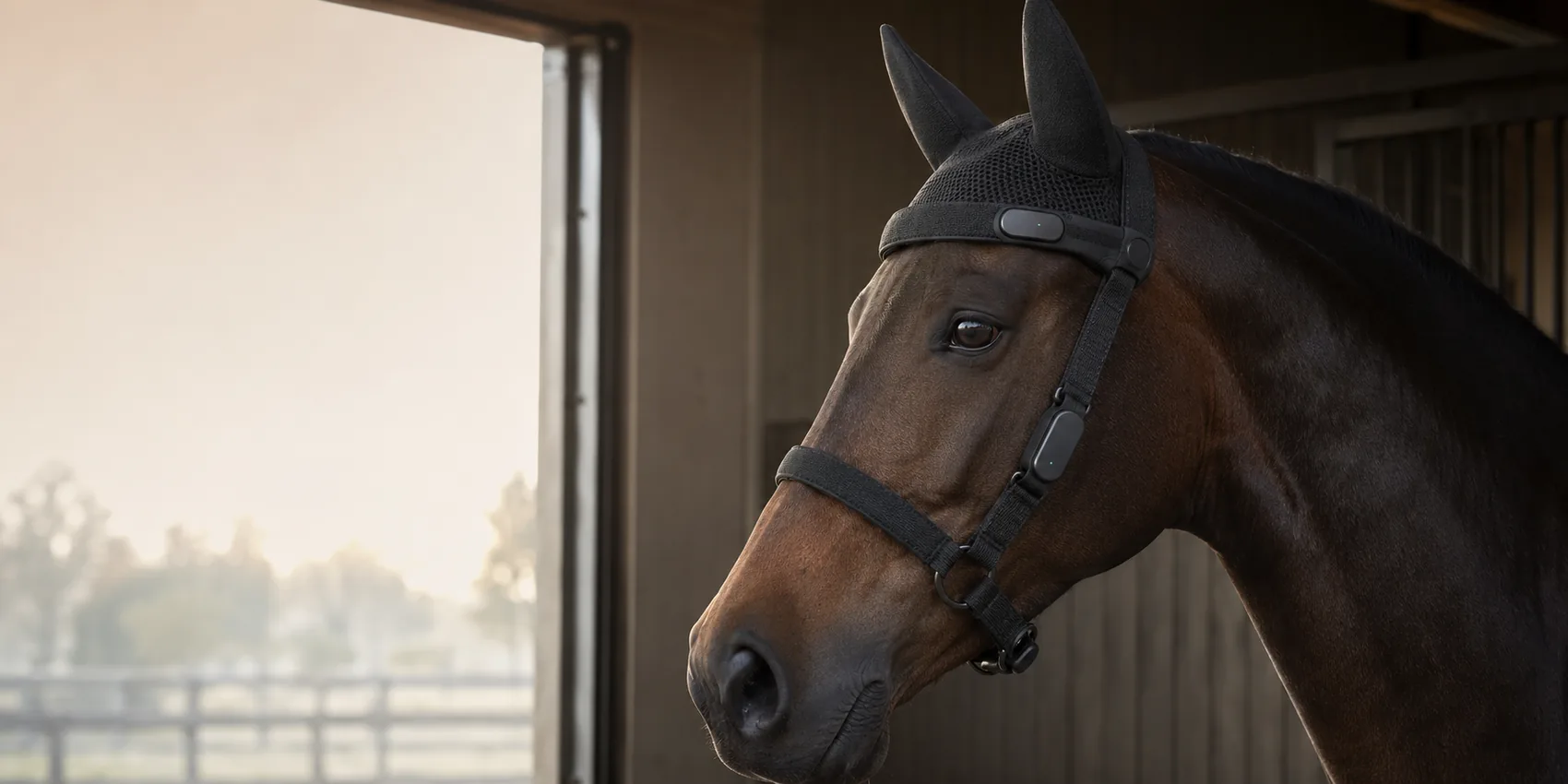
The sensor sits in a fly bonnet — equipment horses already wear and already accept. No adaptation period, no rubbing, no fighting to keep it on. This is the rare case where the hardest problem in wearables solves itself.
The equine product needs no brain sensing at all. Recumbency, duration and posture come straight from motion, which means it can be built, validated and sold years before the EEG work matures.
Who buys it
Multi-horse dashboards, travel monitoring and a record of how each animal recovered from an event.
Objective overnight evidence for cases presenting as narcolepsy, collapse or unexplained behaviour change.
Continuous records as evidence of management and condition — a documented history rather than an assertion.
If you manage horses at scale, or you see collapse and sleep cases, we want to test with you.