Children & learning

Maybe the problem isn’t the child.

When a child can’t concentrate, we try to change the child. We almost never measure the room they’re sitting in, the night they just had, or what their attention was actually doing at 10:40 on a Tuesday.

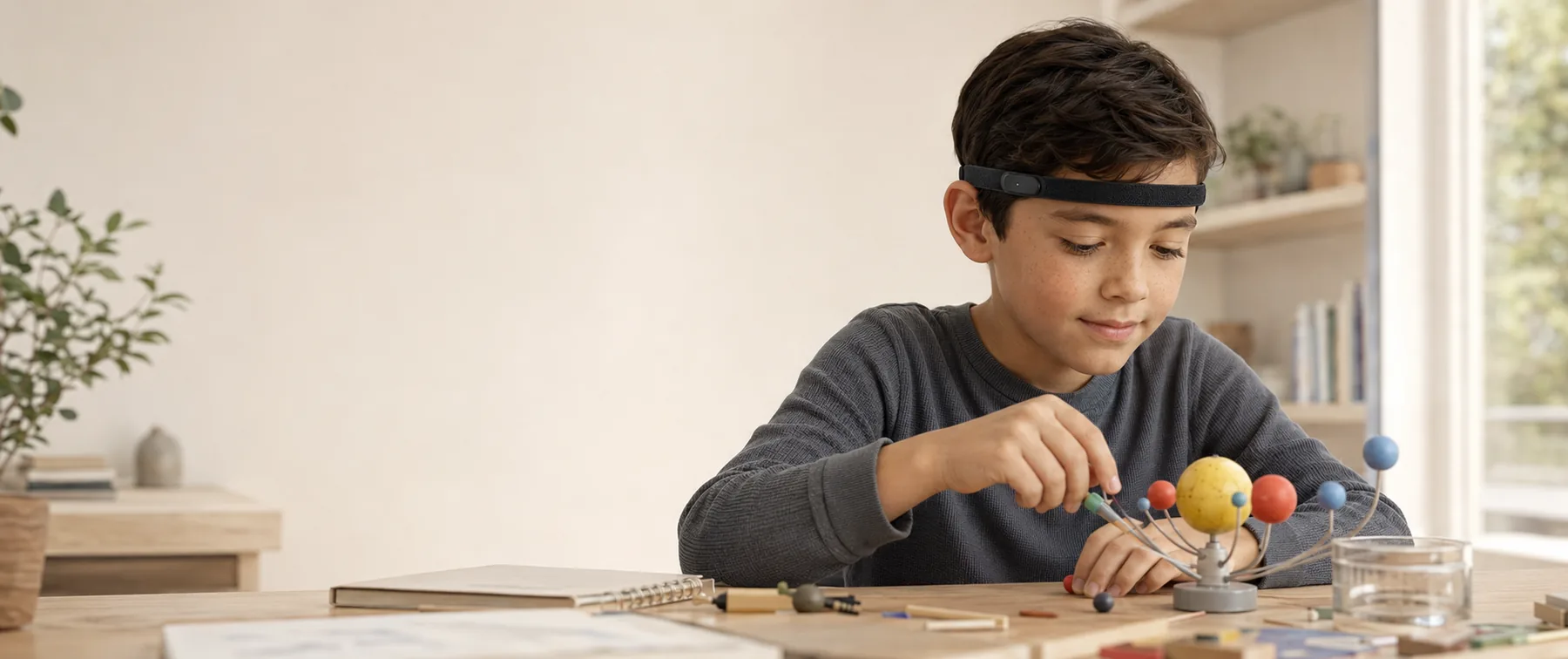
A child studying at home wearing the Ninug band

Why we started

“Twenty-four students. One teacher. And one child for whom the hum of the lights, the scrape of the chairs and the clicking of pens sounds like an orchestra playing out of tune, right inside their head. That child was me.”

For most of the class it’s background noise. For that one child it’s a nervous system running out of capacity. And then we ask: why won’t they concentrate?

School is built around one kind of brain. When a child doesn’t fit it, the instinct is to change the child rather than the system — and increasingly that means medication, sometimes from the age of seven.

Teachers see behaviour. They can’t see sensory overload building, or stress accumulating, or the moment a child’s attention simply disconnects. That information is invisible today. And when an invisible problem finally surfaces as behaviour, it gets a label: lazy, restless, difficult.

We make the invisible visible. Not from an opinion. Not from a gut feeling. From measurement.
How it’s used

Three people, three different views. Deliberately.

The fastest way to get this wrong would be to build a live feed of a child’s brain and hand it to adults. We designed against that from the start.

THE CHILD

Their data, their game

A gentle nudge when attention starts drifting — never a scolding, never a score in front of the class. A focus companion that grows when they sleep well, study consistently and take proper breaks. Streaks for effort, not for results. They can follow friends without anyone seeing each other’s numbers.

THE PARENT

Patterns, not surveillance

Not a live feed. A weekly picture: which conditions produced good sessions, how last night’s sleep showed up in today’s attention, what changed after you moved homework an hour earlier. Enough to help, never enough to hover.

THE TEACHER

The room — not the child

Teachers see anonymised, class-level conditions: CO₂, noise, light, and how the class as a whole is holding attention through the day. Actionable (open a window, move the reading block), with no extra workload and no individual child singled out.

The insight

A classroom is an instrument that nobody tunes.

Poor ventilation, noise and bad light have measurable effects on how well people think. Every teacher knows the last lesson before lunch is harder. Almost nobody has ever seen the data.

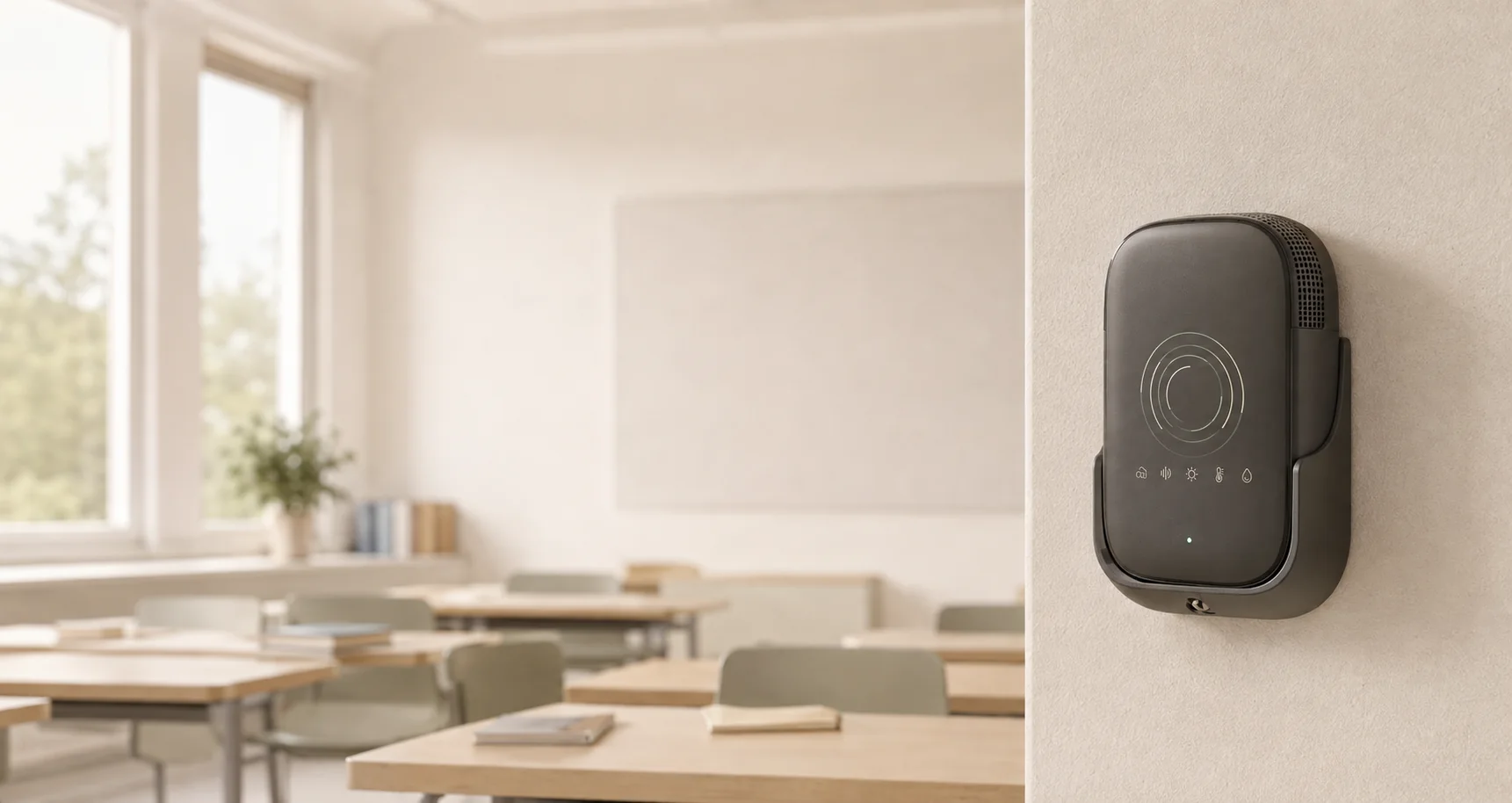
A small sensor in the room logs air quality, sound level, light and temperature. The band logs attention. Put the two together for a few weeks and something useful falls out: not a theory about learning, but a specific list of the conditions in which this child, or this class, does its best work.

CO₂Noise level Light & colour temperatureRoom temperature HumidityTime of day
The Ninug Room sensor mounted on a classroom wall
WEEKLY BRAIN REPORT

Sunday, in plain language

  • Best day: WednesdayTwo long sessions, both after a full night’s sleep
  • Best window: 16:00–18:00Consistently your steadiest attention this month
  • Noise cost you TuesdayEvening sessions above 62 dB lost focus roughly twice as fast
  • Short nights show up the next afternoonNot the next morning — which is why it’s easy to miss

The band

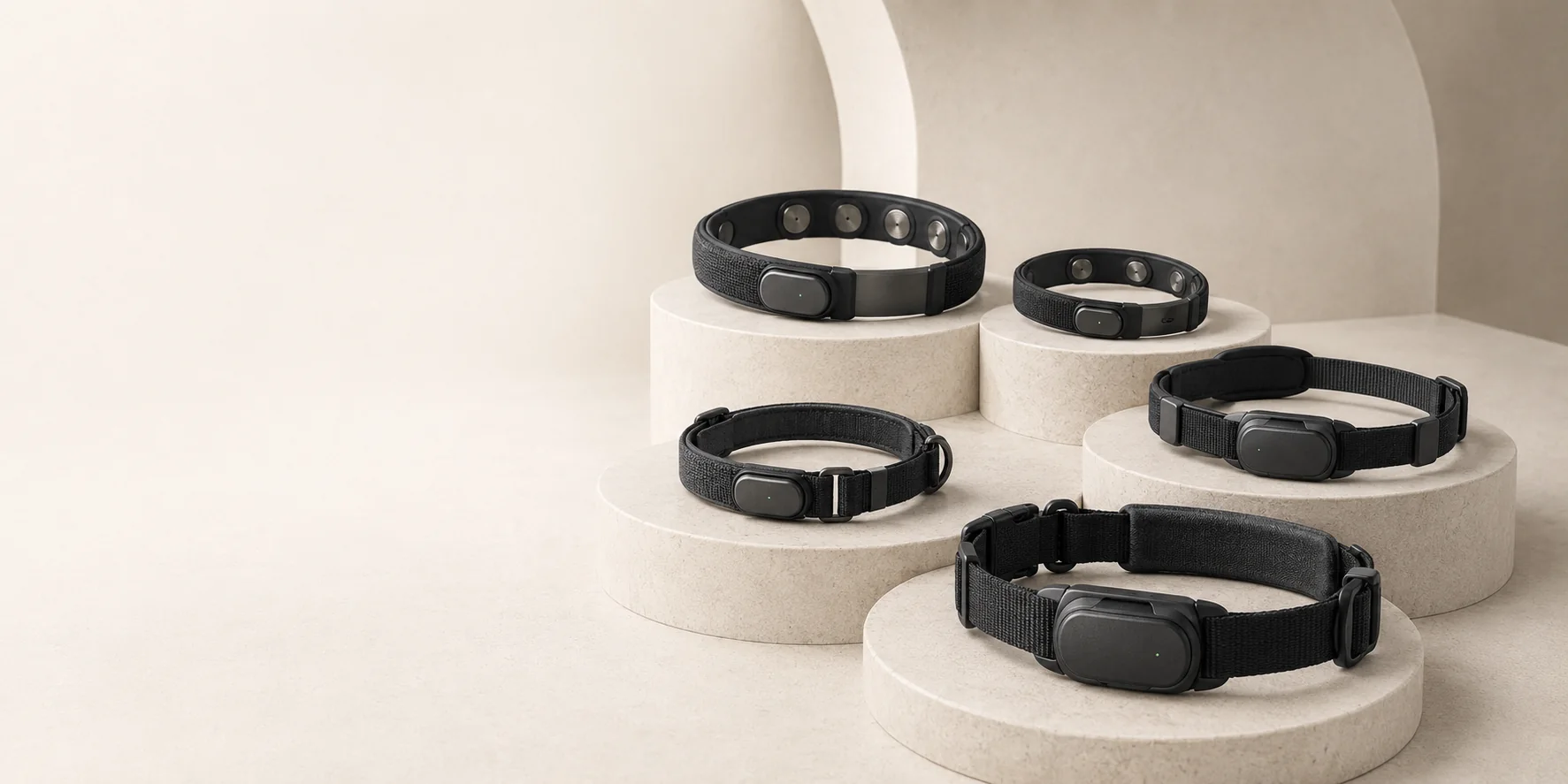
Made in a size that actually fits a child.

Not an adult band pulled tighter. A smaller band, with the electrode spacing scaled to a smaller head — which matters, because contact position is what the measurement depends on.

Soft knit, nothing rigid, nothing a child has to be careful with. It goes on for a study session and comes off afterwards, and it is washable, because it is going to need to be.

The Ninug range, including a smaller band sized for a child

Where we draw the line

What we will not tell you.

  • We do not diagnose ADHDOr anything else. No device can, and a device that implies it can is doing harm.
  • We do not treat ADHDNeurofeedback is a real clinical technique, but its evidence base for ADHD is genuinely mixed — improvements are consistently larger when rated by people who know the child was treated than by blinded observers. We are not going to sell you a therapy on top of that.
  • We do not replace an assessmentIf a pattern concerns you, the right next step is a clinician. We’ll help you bring them something better than a memory.
  • We do not score children against each otherNo leaderboards of attention. No child’s number visible to another child.

So what is the claim?

That a child’s attention can be measured instead of guessed at. That the conditions around them can be measured too. And that putting those two records side by side, week after week, produces something no one in that child’s life currently has: evidence.

Evidence changes the conversation. It moves it away from what’s wrong with you and toward what works for you — which is a better question, and one a seven-year-old can actually engage with.

A brain with ADHD isn’t broken. It’s surviving in a world that wasn’t designed for it. We’d rather redesign the world — starting with the room.

Looking for schools and families to build this with.

If you teach, run a school, work in educational psychology, or have a child who struggles to concentrate and you’re tired of guessing — we’d like to hear from you.