Farm animals
A farm doesn’t need to know how one cow feels. It needs to know which animal changed before anyone could see it, and it needs to be able to show a buyer that the herd is well kept. Both are measurement problems.
What a farm pays for
Animals change behaviour — rest, activity, rumination, feeding — before clinical signs appear. Flagging the individual that deviated from her own baseline first is the highest-value output there is, because earlier treatment is cheaper treatment and fewer losses.
Continuous temperature, activity and rest through hot spells and journeys — the windows where welfare and productivity are both most exposed, and where intervention is still possible.
Retailers and assurance schemes increasingly want welfare demonstrated rather than asserted. Continuous records are the cheapest way to answer — and this comes out of a compliance budget, which makes it the most dependable money in the segment.
What goes on the animal
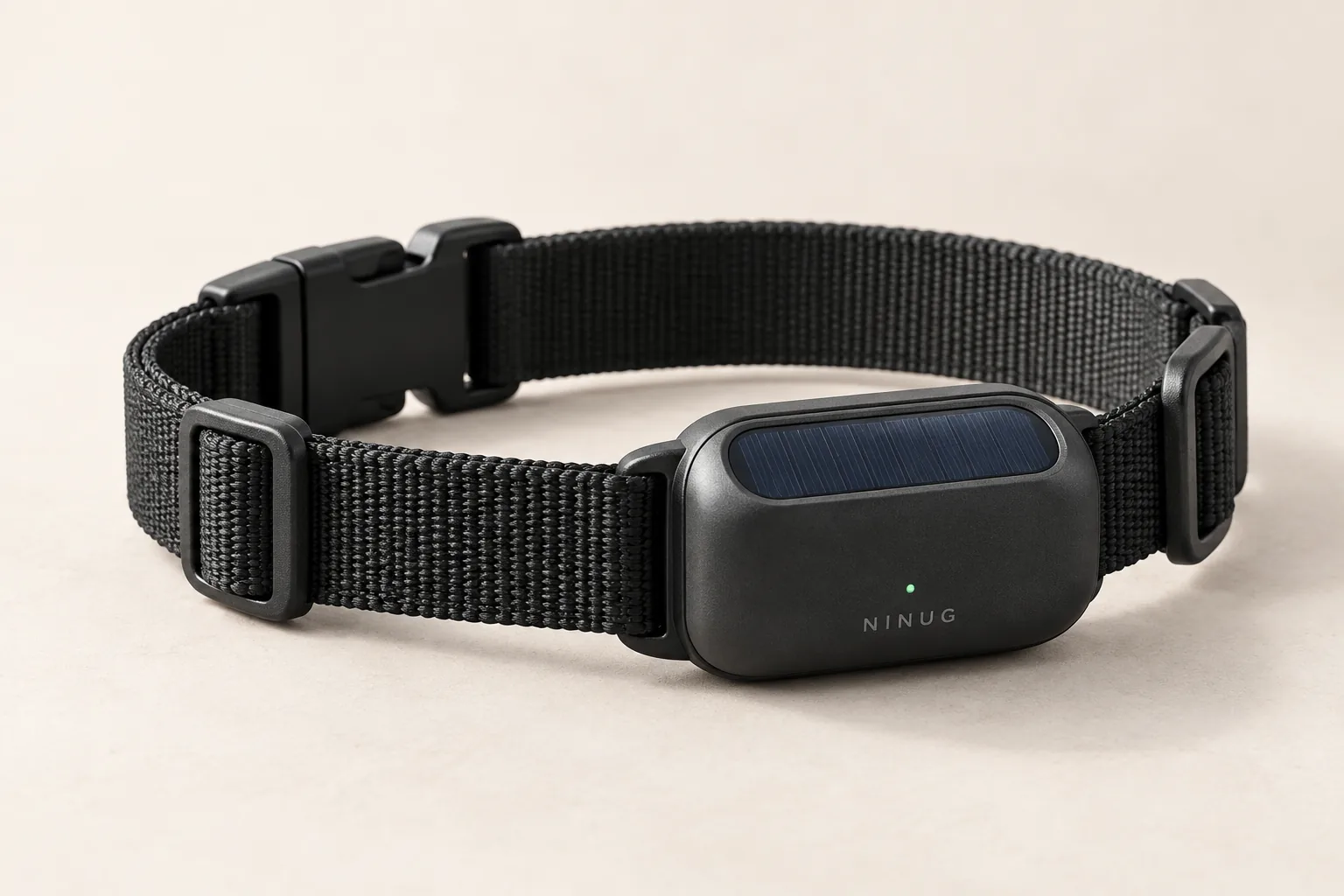
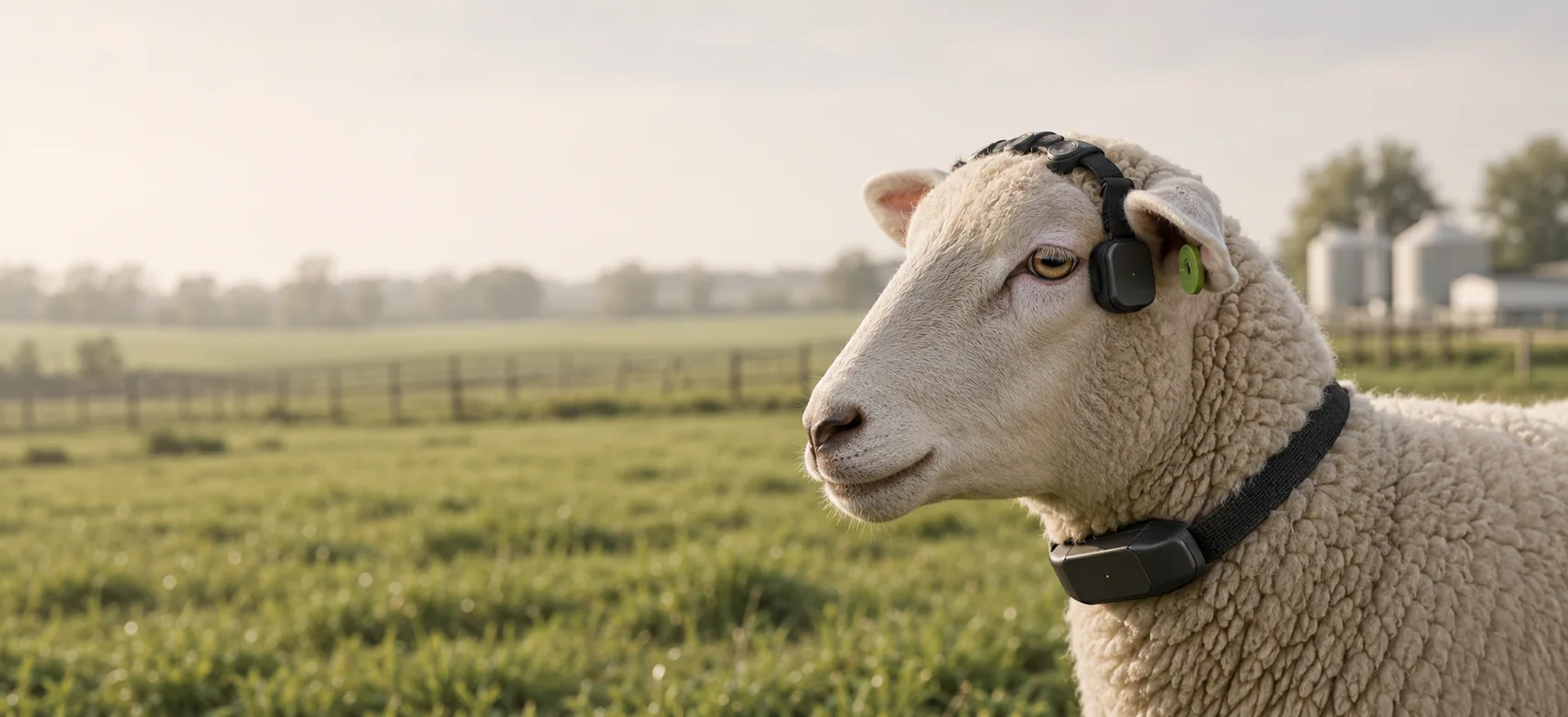
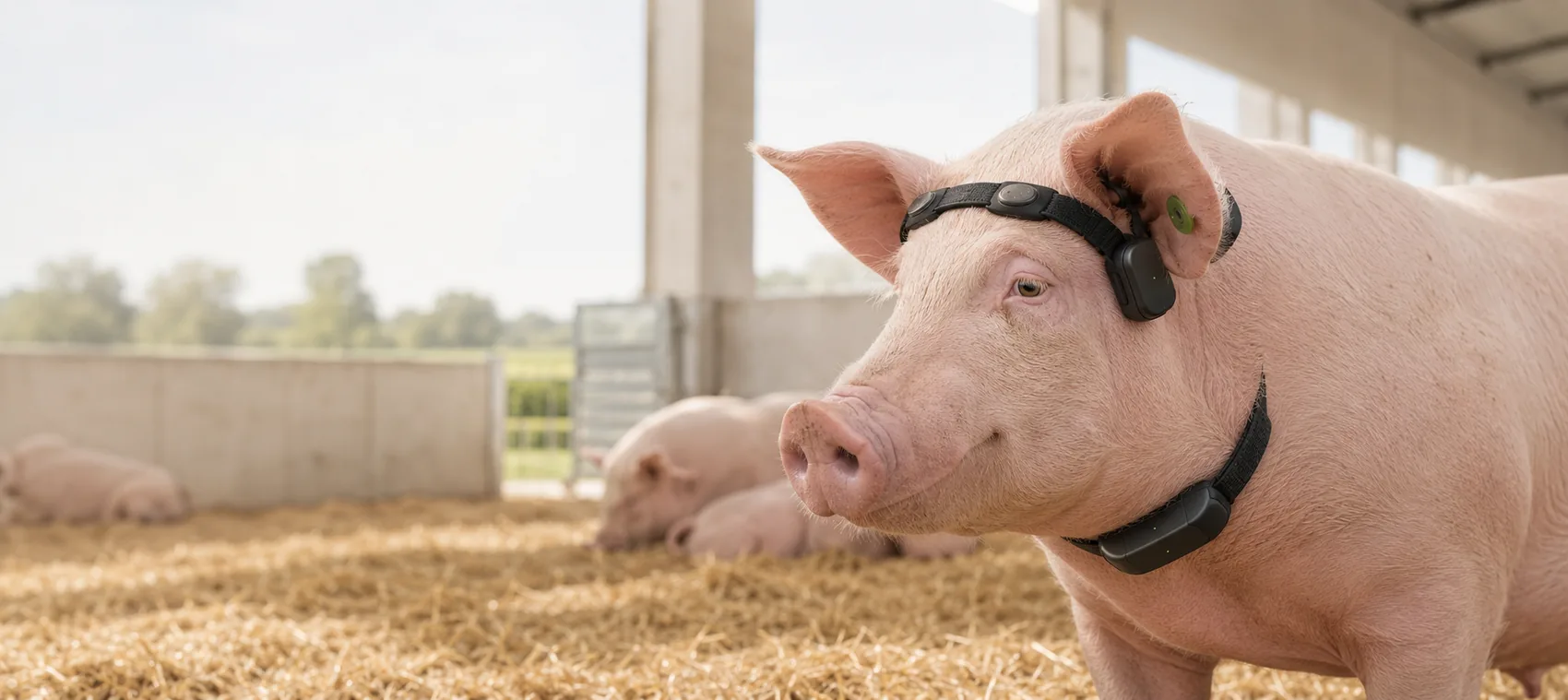
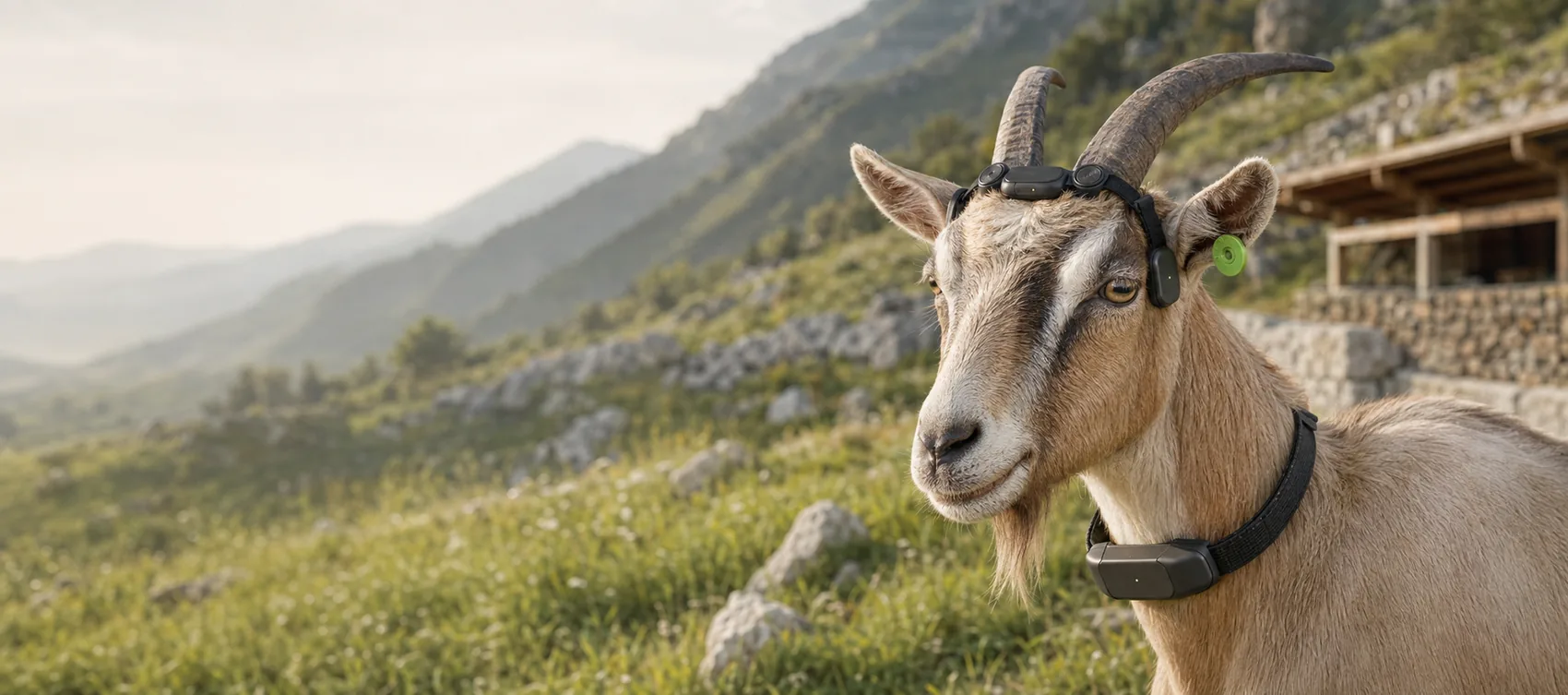
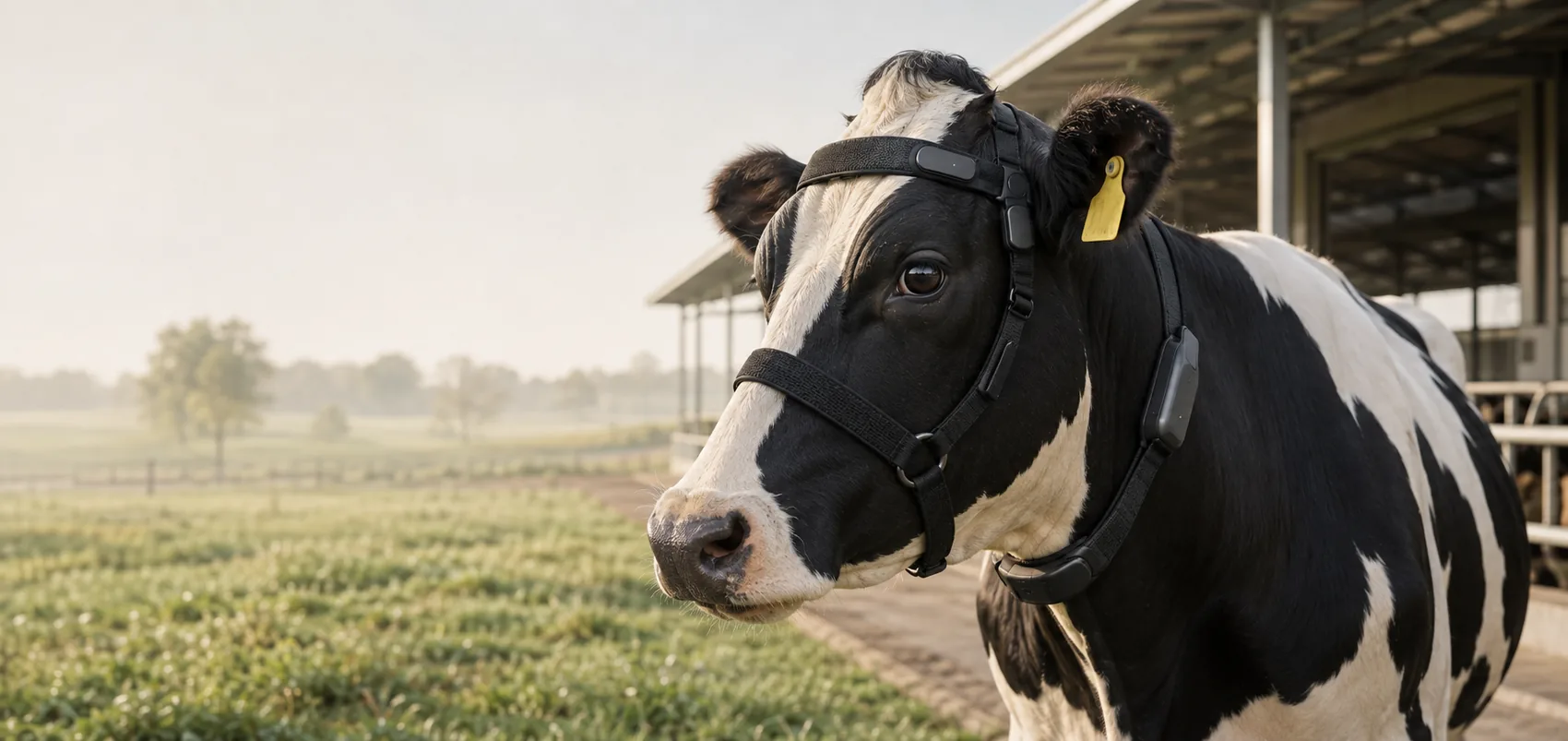
The pod sits at the throat on webbing rather than leather, because leather holds water and a wet strap on a wet animal is how skin problems start. The top face is a solar panel: a collar that has to come in to be charged is a collar that gets taken off in the spring and found again in the autumn.
One status light, no display, and nothing on the animal that a hoof or a gatepost can catch.
Designed differently on purpose
Dairy, sheep, pig and mixed operations — particularly anyone already reporting into an assurance scheme and tired of doing it on paper.
Further reading